This list is in no particular order. . .

1. Death to the Bullshit Artists of South Texas by Fernando A. Flores: Such a disappointment! I loved Flores’s 2019 novel, Tears of the Trufflepig, and compared to it this book of short stories was terribly esoteric at times. About being punk in many forms, it primarily focuses on the music scene of South Texas. Some of these little vignettes really hit the storytelling out of the ballpark, but most fell flat with their unlikable characters, and obscure music references.
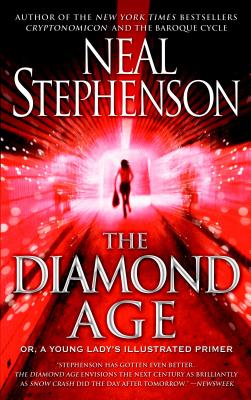
2. The Diamond Age by Neal Stephenson: Let me preface this by admitting that I would probably never pick up a Stephenson on my own if it hadn’t been recommended to me. Though at first willing, and perhaps a little excited, to try something new I ultimately hated this. The book follows the coming of age story of Nell, a young orphan in a futuristic neo-Victorian enclave full of nanotechnology who, against the odds, comes into possession of a Primer for young ladies. These books were popular among young women in the Victorian era of our time. In a world dominated by nanotech, this primer (which utilizes artificial intelligence, and a voice actor) becomes like a surrogate mother to Nell as she navigates her way through learning and rising above the social caste in her world. Basically a little girl is given a magic book, and it changes the course of her life. Stephenson raises some interesting questions/ideas such as, what happens if nations are obsolete and we base geographical boundaries on racial, cultural, and ideological factors instead, what happens if you let A.I. raise a child, and the dangers of independent thinking, but these themes are not well executed. I’m going to rehash a number of complaints for this that were included in last year’s review of Snow Crash, the first Stephenson I ever tried to push through. I found Stephenson’s writing to be clunky and juvenile once again, as well as self indulgent. Seriously, if Stephenson’s books are anything they are works of personal ego stroking for the man who wrote them. I hated the machismo that seeped through the pages of this book, when it’s supposed to be about a girl who beats the system and becomes something more than the status quo. It was like writing it was just an outlet for some perverted fantasies of the author. Tell me, why is a teenager employed as a scriptwriter for porn, or what Stephenson likes to coin as “interactive erotic fantasies”??? Oh, and let’s not forget to mention the rape scene. I guess it says something about how this is a male dominated world, and females must take what is given to them. Also, the infodumping is terrible. I hated it. It did nothing but bog down the story and sidetrack the reader, and I completely lost interest in whatever convoluted nanotechnology the author was trying to describe, which made this book about 300 pages too long (I skipped over good-sized chunks while reading, because there was no other way I was ever going to finish it). Not only that, but I felt as if all the technological descriptions took away from character development as well as the plot (I’m not even sure if there WAS a plot). The story-within-a-story didn’t help this matter much either. I can’t tell if Stephenson is really that bad, or if he’s just not my type of storyteller. Either way, no thank you.
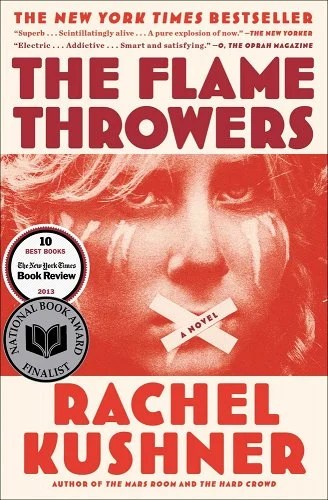
3. The Flamethrowers by Rachel Kushner: I wanted to like this, but I found the characters unlikable, the writing sporadically engaging, but overall a dull read that was trying far too hard to come off as smart. It took me forever to finish. The Flamethrowers is primarily narrated by a young woman known as “Reno” (we never discover her real name) who has an affinity for motorcycles and art. (Badass, right?) After selling her motorcycle, she moves from Reno, Nevada (hence her nickname) to New York City as a young twenty-something to pursue her art career in a half-assed way, and falls for Sandro Valera, an older established artist from an Italian rubber and motorcycle manufacturing dynasty who hates his home country, his family, and the legacy they’ve developed over the years. While we read about Reno racing in speed trials as a lone woman at the start of the book, the idea of the independent woman breaking down barriers is quickly lost as Reno becomes lustful for nearly every male she comes into contact with. She eventually finds herself on the sidelines in Italy during The Movement of 1977. That is, until she’s cast in the role of a getaway driver. Reno travels back to New York City with a changed outlook on life, Sandro is finally forced to contend with his family (what’s left of it, anyway), and here Kushner makes some interesting points about the duality of man, but they fall flat with her mishmash of storylines and ostentatious style of prose that was nearly overwritten to the point of boredom.
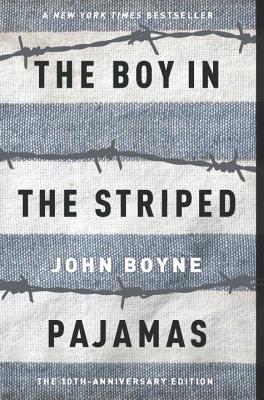
4. The Boy in the Striped Pajamas by John Boyne: Am I going to look like an asshole for saying that a fictionalized account of the terrors of the Holocaust from the point-of-view from an incomprehensibly naïve 9-year-old is complete garbage? Well. . . that’s what it is. Complete, repetitive, and kinda demeaning garbage. I realize that this book was written for young readers. However, I do not think that Boyne was giving his readers (no matter their age) much credit by dumbing down, and overly fictionalizing a very prominent time of terror in history. If anything, it almost feels like an affront, unintentional though it may be. 9-year-old Bruno moves onto the outskirts of the property that is home to Auschwitz with his Nazi commandant father, mother, and older sister. Unbelievably, he’s too thick to realize what’s going on. He constantly mispronounces The Fuhrer as “The Fury” (a funny mishearing on Bruno’s part at first, but it eventually ceases to hold any kind of comedic value or metaphor, especially after he’s corrected more than once), Auschwitz as “Out With” (Boyne was obviously having some fun with this), and at one point has the nerve to ask his older sister if their family is Jewish. Wouldn’t you think that with a high ranking father in the Nazi regime, little Bruno would be primed to join the Hitler Youth when he turned 10? How can he not know what a Jew is? One would think he would be attempting to mimic his father at every turn, but no, he doesn’t even know what “Heil Hitler” means. Bruno eventually lopes around the family’s new backyard out of boredom one day until he gets close enough to the barbed wire fence at Auschwitz to befriend a Jewish boy named Shmuel. I really hope I don’t have to explain to you how inconceivable it is that two boys from very different backgrounds during a genocidal world war would meet in this way. Where are the guards? Why does this young concentration camp prisoner have so much time on his hands to sit next to the fence and just wait for our little protagonist to come say hi? Better yet, how did he even survive this long? By the end of the book, when Bruno and Shmuel both find themselves in a gas chamber, I was so over the stupidity in this story that my eyes were completely dry. I can’t believe they made a movie out of this, but I imagine there were some very heavy handed rewrites. I have never thought of John Boyne as a bad writer, at least when it comes to adult fiction, so reading this was a surprise for me. If you’ve interested, I recommend The Heart’s Invisible Furies as a good place to start with Boyne.
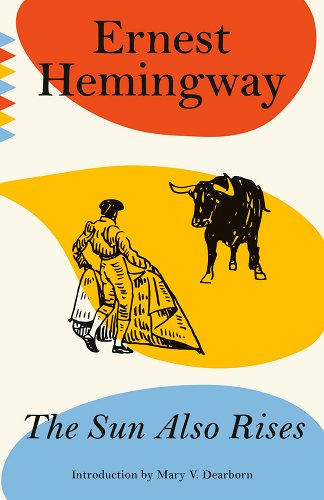
5. The Sun Also Rises by Ernest Hemingway: I’m gonna be straightforward here. . . I had only ever read Hemingway’s short story, Hills Like White Elephants, before. That was my only prior exposure to the author. I was not prepared for the antisemitism and homophobia I found within the pages of this “quintessential” novel. I realize it was a different generation; a completely different time when it was written. It was just so blatant. I was surprised. Perhaps that played a part in my dislike. Although, I wouldn’t really say that I liked Hemingway in the first place. The bullfighting scenes were enjoyable though. As well as Lady Brett Ashley.
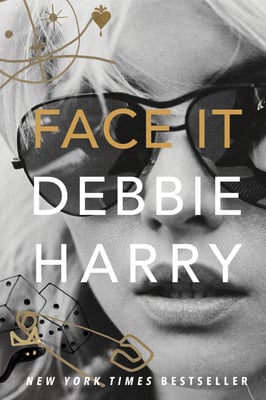
6. Face It by Debbie Harry: Sometimes I don’t know if I like Debbie Harry or if I wanna BE her. She’s still badass even in her 70s. If I had been a teen in the early eighties my bedroom walls would have been plastered with posters and photos of her. Punk, feminine, looks good covered in sweat under stage lights. At least in my opinion, it’s early impossible to see her as unattractive in any way. She’s a woman who looks good doing anything, or wearing anything. Instead, here I am. . .a girl whose teenage years were in the mid-noughties, and I’m about to criticize her memoir. . .Messy, repetitive, and at times even mundane. Who would’ve thought the life of the face of Blondie would nearly bore me to death? Don’t get me wrong, parts of it were good and worth the read. Harry’s adolescence is particularly interesting, as well as her blossoming adulthood on the Lower East Side of Manhattan in the underground music scene that was chocked full of creativity of all sorts during the 1970s, working with John Waters on the original Hairspray film, and her foundational belief that no matter what we are on the outside, or what we identify as, we all encapsulate both male and female aspects within ourselves. What bored me was the name dropping, and touring. Life on the road isn’t as glamorous and exciting as it may seem on the outside, and if I hadn’t read another memoir from a different artist during this short lived No Wave era (which earned a spot on my Best of. . .list) earlier this year, then I wouldn’t have been familiar with, nor would I have cared, about any of the other musicians/filmmakers/painters/writers/designers/etc. that Harry listed ad nauseam in this book. She managed to write an aloof memoir that didn’t get too personal (even her heroin addiction seemed to be glossed over), and her storytelling suffered greatly because of it. If you’re a fan of Blondie, I think you’ll enjoy the good stuff that this memoir has to offer, but overall I found it really disappointing. Debbie, I love you still. I think I’ll always find you empowering. I just found this memoir to verge on the unnecessary. (Is that a little harsh?)
Isn’t that Jersey accent just the cutest?
You’ll notice that I’ve stopped linking to Amazon pages for the books listed above. Instead, you will find links to bookshop.org pages. This is an ecommerce start up that has made it their mission to give independent bookstores a fighting chance in this ever increasing online world of bookshopping that Amazon has dominated for so long. I am not sponsored by them. I don’t get any money for writing this silly little book blog, but I am a girl who loves her independent bookstores. So, if you’re looking to buy a new book via the interwebs, please check them out. You can even search for an indie store to support, and they will receive the full profit from your order!
Check out 2020’s “Worst of” list by clicking here.
Want to know what else I read in 2021 that didn’t make this list?
Click here to access my Goodreads profile.
 Like Wild Onions