This list is in no particular order. . .
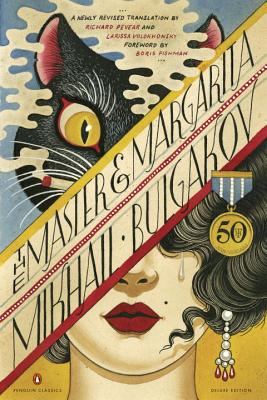
1. The Master & Margarita by Mikhail Bulgakov: This treasured classic opens as if it was the set up for one long joke. “The devil runs into two Russian atheists in the park. . .” This is a novel of contrasting extremes with some absurdity thrown in, and ultimately held together by a love story. If you find Russian Literature to be too dark and dire, then give this novel a go anyway. It certainly bucks the trend of deep, dark soul searching found in most Russian Lit. . . and the gulag! Devil knows what you’ll think! Also, be sure to find a copy with good footnotes, they help. If anything though, just read it for the vodka drinking, gun shooting, mouthy cat. It deals with themes involving the quest for freedom to think and believe without the control of censorship, although that freedom does come at a price. How laughter and silliness make most situations more bearable, and provide a certain optimism. It is certainly also a critique of 1930s Soviet Russia, and while written during a time when the KGB was disappearing people, Bulgakov requested that it only be published after his death. Most important of all, this classic sheds light on how and why evil can be treated as an everyday occurrence, and how in turn truth is often veiled in shadow.
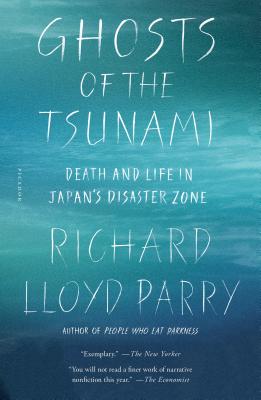
2. Ghosts of the Tsunami by Richard Lloyd Parry: On March 11, 2011, a massive earthquake sent a 120-foot-high tsunami straight to the northeast coast of Japan. By the time it was over, more than eighteen thousand people had been killed in the numerous ways a tsunami wreaks havoc on land, most notably the children of Okawa Elementary School. This event was Japan’s greatest disaster since the atomic bombing of Nagasaki. In its wake was a national crisis, and the meltdown of a nuclear power plant. Parry also touches on many aspects of Japanese culture, including disaster preparedness, ghost stories, and religion that not only helped victims through the trauma of the tsunami, but were at times the center of it as well.
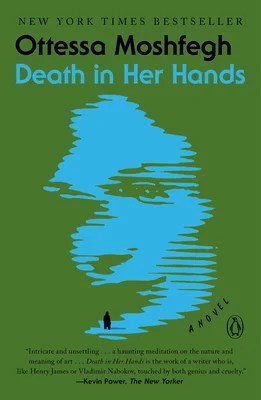
3. Death in Her Hands by Ottessa Moshfegh: Moshfegh’s writing is electric for me. At this point I have read every single book she’s had published, and while this one seems less full of her usual fast paced storytelling, it is completely character driven, and builds up beautifully. It still left me in a state of the surreal and strange that I have been so accustomed to expect from Moshfegh. It holds the heart of those murder mystery novels by Agatha Christie when our narrator, Vesta, stumbles upon an ominous note in the woods next to her lakeside cabin, and opens up the story in new and exciting ways. It also touches on the topic of the stories we tell ourselves, and why. How if we tell them enough, they become true in a sense. Sometimes these stories can even lead us astray from the real truth.
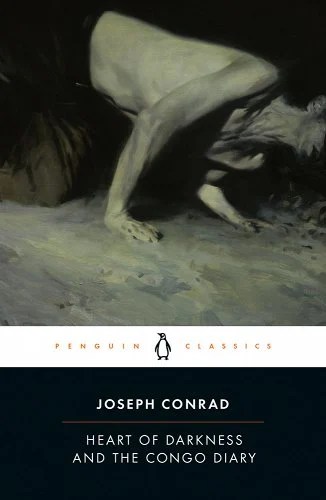
4. Heart of Darkness by Joseph Conrad: I reread this little novella even though I vowed never to touch it again after my Senior year of high school. In doing so I now realize our AP English teacher really had no business trying to teach us this figuratively heavy little book. I think the fact that all of us struggled in our group projects to coherently explain the importance and motif of the river really tells me something about public school education. (I remember my group made a snake/river out of yarn, but the head was too heavy so the glue didn’t hold when we held up our poster board for our presentation. The whole class held back laughter as our snake flopped around, and we learned afterward that they thought it looked like a penis. Immaturity at its finest! These were also the same kids to kept rewinding the film version of Lord of the Flies so they could watch Piggy’s death over and over again in peals of laughter. God, AP English was hell.) Also, I do not remember imperialism being mentioned once while we were being taught this book. Not once! And the racism issue seemed to have been handled very delicately in the classroom, because there was no deep discussion about that either. I even had a Joseph Conrad scholar for a professor in college who couldn’t manage to spark my interest in this book. Now that I’m older, and am leagues away from the person I was in high school, I thought I’d give this little novella a reread. Now, here we are. . . I certainly see why some are so drawn to this book. Conrad makes a point of demonstrating the lack of any real, fundamental differences between civilized and primitive societies. Breaking down barriers and misconceptions about people who are different from us. Then of course there’s Marlow’s wanderlust, and condemnation of the “noble” efforts of European colonists. While this book is still overly wordy (it’s less than 200 pages, but it’s a bit of a struggle) and is at times frustratingly ambiguous, the prose is beautiful and that’s what kept me truckin’ along.
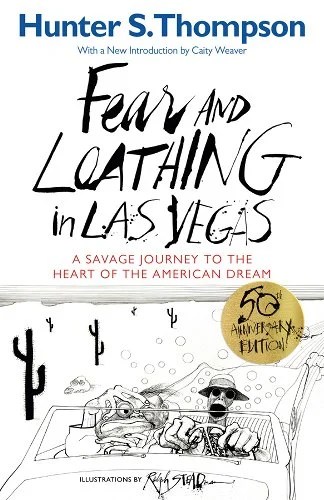
To preface this next book. . .I’ve had a love/hate relationship with Hunter S. Thompson for a long time. The hate came from a handful of college boys, who weren’t even lit majors. You know the type I’m talking about. . .They were most likely general humanities majors, smoked two packs a day, wore thick Buddy Holly hipster glasses, looked like they hadn’t showered in two weeks, religiously listened to the Joe Rogan Experience, and when they talked about Thompson (mostly just Fear and Loathing in Las Vegas, because I don’t think they had actually read anything else, but what’s more likely is that they had only watched the film version) they’d claim it wasn’t about the drugs, and yet the drugs were all they talked about. It was disgusting to me. Silly boys, drugs are for real men who know that the fact that they do them is the least interesting thing about them! Also, try and fail to emulate the notorious Good Doctor all you want, but you’ll never look this cool in a pair of short shorts and gold chain:
Anyway, I reread Fear & Loathing this year because it’s now half a century old, and loved it maybe even a little more than the first time I read it. Sure, at times it’s overly macho and somewhat womanizing. Overall it can be a little bit repulsive, but it’s a beautiful ride all the same thanks in large part to Thompson’s writing skills. He also touches on some important social issues in the novel such as the abuse of power, and manipulation of the public eye. If you’ve only ever seen the film version, I highly recommend reading the book. Johnny Depp has nothing on the real Thompson (or even Raoul Duke for that matter), and the fact that he’s become synonymous with him is almost degrading. Besides, the book is far more cerebral than you think, and I don’t believe that translated well on screen. I decided to comb through some of Thompson’s other work this year because I was determined to reclaim him from those nasty little boys who tried to mansplain him to me during all those drunken nights in college. His short collection Screwjack was a beautiful read for me this year. Erratic, salacious, and lyrical it’s certainly something that no fan of HST should miss.
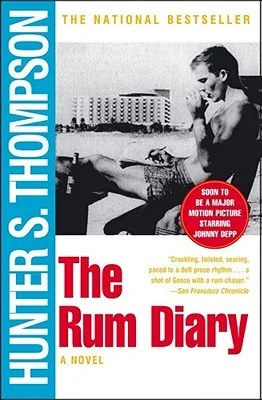
5. The Rum Diary by Hunter S. Thompson: This is Thompson’s earliest book written in 1959 when he was just 22, yet it wasn’t publish until 1998. It’s a fine piece of literature, and smartly written. Is this his answer to Puerto Rico’s own version of Fear and Loathing? No, although there is plenty of talk about the American Dream. This is a work of complete fiction, but you can find hints of autobiographical parallels. However, there is no Raoul Duke here. No Dr. Gonzo. No hard drugs, but there are plenty of hamburgers and rum. In interviews, Thompson said of this novel that “I still can’t beat that goddamn Gatsby.” While I’m not a huge fan of Fitzgerald, I think Thompson came pretty damn close to hitting on something about the “Great American Novel”. We follow Paul Kemp, a 30-year-old journalist originally from St. Louis working for an American paper in San Juan. He finds that he’s surrounded by a bunch of drunks, con men, and rebel rousers at the paper he’s newly hired at. Throughout this journey, the reader is pressed with questions. What is the American Dream? What is it to fellow Americans, and what is it to Puerto Ricans who immigrate to the States? Kemp is only 30, and yet he narrates the story with a fatalistic tone. He claims he’s old, his luck is running out, and he’s quickly finding himself lacking opportunities to get his shit together. What does this say about society’s value on age? What does it say about imposed expectations in general? Oh, and the FEAR. Something that has continually run through Thompson’s work but has never shined quite as bright as it does in this novel:
I had done a lot of things, but I had never been a Puerto Rican. . . It occurred to me that the real reason these people were leaving the island was basically the same reason I had left St. Louis and quit college and said to hell with all the things I was supposed to want. . .
And I wondered how I might have sounded if someone had interviewed me at Lambert Airport on the day I left for New York with two suitcases and three hundred dollars in an envelope full of my clippings from an Army newspaper.
Tell me, Mr. Kemp, just why are you leaving St. Louis where your family has lived for generations and where you could, for the asking, have a niche carved out for yourself and your children so that you might live in peace and security for the rest of your well-fed days?
I sit around here and I look at this place and I just want to get out, you know? I want to flee. . .
. . . Maybe I should say that I feel a rubber sack coming down on me… Purely symbolic, you know. . .the venal ignorance of the fathers being visited on the sons… Can you make something of that?
Mr. Kemp, I wish I could say how much I sympathize, but you understand that if I go back with a story about a rubber sack they’re going to tell me it’s useless and probably fire me. Now I don’t wanna press you, but I wonder if you could give me something more concrete; you know – Is there not enough opportunity here for aggressive young men? Is St. Louis meeting her responsibilities to youth? Is our society not flexible enough for young people with ideas?
Well, fella, I wish I could help you. God knows I don’t want you to go back without a story and get fired. I know how it is – but. . . well. . .I get the fear. . . Can you use that? St. Louis Gives Young Men The Fear – not a bad headline, eh?
. . . Tell them that this man Kemp is fleeing St. Louis because he suspects the sack is full of something ugly and he doesn’t want to be put in with it. He senses this from a far. This man Kemp is not a model youth. He grew up with two toilets and a football, but somewhere along the line he got warped. Now all he wants is Out, Flee. He doesn’t give a good shit for St. Louis or his friends or his family or anything else… He just wants to find someplace where he can breathe… Is that good enough for you?
Isn’t that young and naive lust for going against the grain, and not succumbing to the norm, familiar to you? Doesn’t it light a fire in your belly that you haven’t felt since your youth?
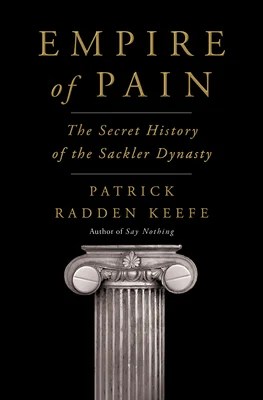
6. Empire of Pain: The Secret History of the Sackler Dynasty by Patrick Radden Keefe: I’m sure you’ve heard the name Sackler before. It seems like it’s plastered on every significant museum on the East Coast, as well as across the Atlantic on reputable establishments like the Louvre and Oxford, but you’re probably not familiar with the big pharma company behind the Sackler clan. Patrick Radden Keefe takes us through three generations of the Sackler family, beginning with the patriarch Arthur. The Sackler family wealth was gained on the pain and addictions of others, with help from the dubious marketing of opioids. Most notably, Oxycontin. For years, the source of the family’s riches was vague to the public, and Radden Keefe is here to expose the truth of it all, and the operations that went on out of the public eye at Purdue Pharma. It’s journalism with a narrative jaunt. Radden Keefe admits that he loves a good secret, and he likes to expose them in his pieces with a flourish of storytelling that immerses you in some niche part of history that you had no idea you’d be interested in in the first place. Arthur Sackler might have had noble endeavors in mind when he first entered the medical marketing field, but the benefits of wealth seemed to have gotten the better of him. His suspicious practices were kept hidden under the guise of philanthropy, and a desire to keep mud off the family name. He made huge monetary contributions to numerous museums and universities over his lifetime, on one condition. . . that his name be prominently displayed on whatever wing or gallery he helped create. Fast forward to 2019. Decades of overprescribing, a downplay of their addictive qualities, misuse, and the sly marketing of Purdue Pharma have created a rampant opioid crisis in the United States. When prescriptions stopped becoming so readily available and too expensive, people turned to heroin and street fentanyl causing a steady rise in overdoses. Now the public, aware of what kind of people the Sacklers are thanks to some investigative journalism and lawsuits over the years, wants the family to own up to their role as a catalyst for this drug epidemic, and institutions are starting to scrape the Sackler name from their buildings. So much for protecting and maintaining the honor of the family name, right Arthur? The opioid crisis has killed more people than car accidents and gunshot wounds combined, and is the leading cause of accidental death in the United States. Litigation for the opioid crisis is still ongoing, and earlier this year the Sacklers, as well as Radden Keefe, testified in a house hearing on the pharmaceutical company’s role in providing opioids to the masses. The family is currently attempting to use bankruptcy as a way to escape the consequences of their actions. This isn’t a book about the opioid crisis exactly. This is a book about a dynasty of Americans who left their mark on our country in a way they didn’t exactly intend. It’s a story of familial corruption and hypocrisy that started from rather humble and earnest beginnings, and the eventual greed and abuse of power that would cause their downfall.
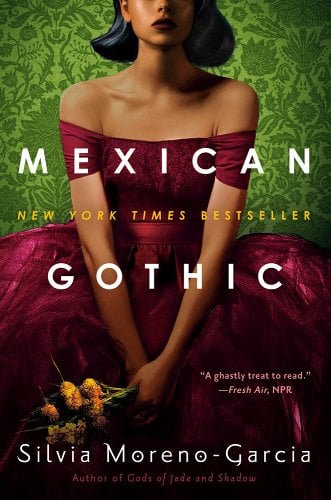
7. Mexican Gothic by Silvia Moreno-Garcia: A love letter to Gothic Literature, and a great addition to the genre in its own right. I might have liked this less if I hadn’t been as familiar as I was with Gothic Lit. A bit of a slow burn at first, but I absolutely ate this up. With the entertainment value as high as it was for me, I wasn’t expecting to find it to be so well written. Mexican Gothic is set in 1950’s Mexico, and yet feels modern in its ideals and storytelling. I appreciated the mix of traditional Mexican myth weaved into the plot as well. I don’t read horror often, but this was too much of an exciting read not to give it a mention here.
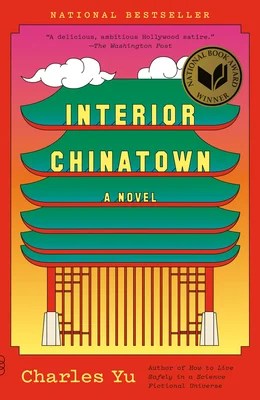
8. Interior Chinatown by Charles Yu: Hollywood satire like no other. Yu’s writing style is delightfully innovative as he uses a variety of forms to tell this story of Chinese immigrants and their lineage as they assimilate in the Western World. A multigenerational saga that seems perpetually stuck in a stereotypical movie script. It blurs the line between what’s real, and what we see in films, really giving the book a cinematic depth. The characters in this novel, who are usually lumped together as “generic Asians” and populate the sidelines of American stories, have starring roles here. By bringing the sons and daughters of immigrants to the front, Yu raises some important questions about what it means to be “American” and who gets to be one, how people from Asian descent are viewed as “perpetual immigrants” in the states, the ceiling which minorities hit when it comes to their success in a land that promises fulfillment if you work hard enough, their inferiority complexes that rise from racism, and how being Chinese in the United States has become an invented construction. A performance of easily digestible stereotypes, especially when it comes to working in the film industry.
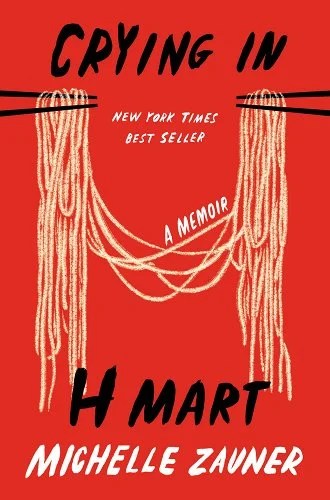
9. Crying in H Mart by Michelle Zauner: 2021’s most highly lauded and talked about memoir, for good reason! Michelle Zauner is the front-woman of the indie rock band Japanese Breakfast. She lost her mother to cancer in 2014. In losing her mother, she gained a new respect for Korean food in numerous ways. Learning how to cook it, the memories it holds, the sense of love that it can carry with it, familial connection, and cultural identity. All of this she learns while caring for her mother through her first chemo treatment, and eventual death. This memoir is both unique and universal. Who isn’t moved by food, and the memories that arise from tasting something familiar? Something like what our mother used to make? Zauner’s descriptions of Korean dishes, though probably unfamiliar to many of her readers, are sumptuous and delightful. Her struggles with her Korean-American identity are personal, but are important in that they seem to define part of her strained relationship with her mother while growing up on the West Coast. Child/mother relationships aren’t always full of love and care. Sometimes they can be tumultuous and complicated, especially when coupled with a youthful yearning for independence, or on the other hand, to fit in. Overall, I found this memoir to be raw, poignant, at times humorous, and chocked full of vulnerability. It’s certainly worth a read.
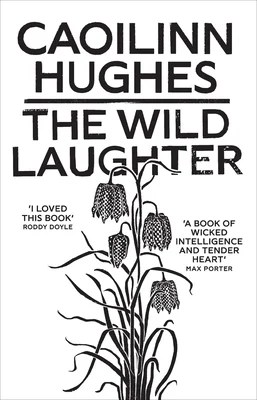
10. The Wild Laughter by Caoilinn Hughes: Man, do I love contemporary Irish literature. This novel is set in rural Ireland, 2008. The Celtic Tiger has run its course through the country, and now a recession is in progress. Guilt, grief, and desperate measures of the economically depressed are all on display. Brothers are at odds with each other, a son wants more for himself than what’s expected of him in his rural farming family, a father has fallen from his precipice that he built with hard work and destroyed with ignorant property investments. To top it off, he’s in ill health. Hughes seems to be telling a story with ancient tropes here. Warring brothers, familial ties of expectation, and the fall of a patriarch. This helps to mirror and highlight that old fashioned ideas are being challenged by new ones in a country heavily enmeshed in the ideals of catholicism. Faith, responsibility, religion, and love are all turned on their head. In what could have been a very dark and droll experience, Hughes manages to give the reader prose that is plump and lilting, with a sharp, dark wit about it. It’s a beautiful tragicomic tale with familiar conflicts caused by contemporary problems.
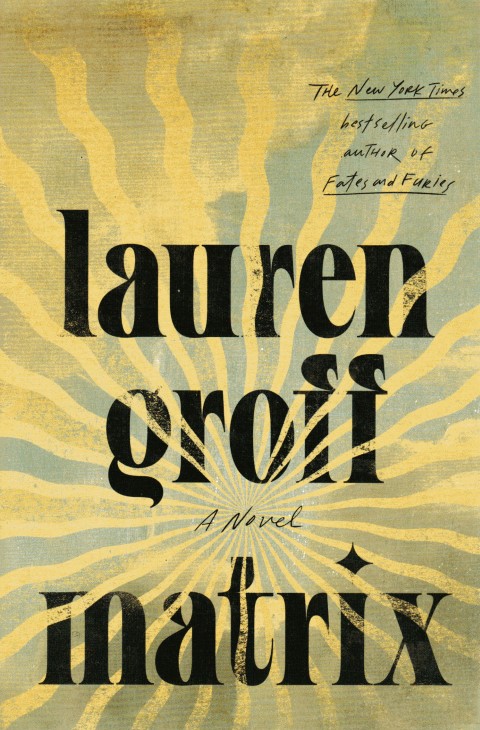
11. Matrix by Lauren Groff: Lauren Groff’s writing is so rich, and I am an absolute glutton for it. For all of it. This book might not be a perfect 5 stars, but my enjoyment of it is worth that and much more. That being said, I would not recommend this for people who have never read Groff’s work. Start with her short stories, and if you like them enough definitely dive into this. Her new novel is historical fiction that speculates on the life of 12th century poet, Marie de France. Any other author besides Groff attached to this book, and I wouldn’t have given it a second glance. Her often debated use of “purple prose” makes her storytelling fresh, unique, and somewhat unpredictable. With Matrix she gives us a story of a strong willed women, bravery, inspiration, faith, passion, forbidden love, the pitfalls of ambition, and perhaps most important of all. . . a story of women in all their beauty. Internal and external.
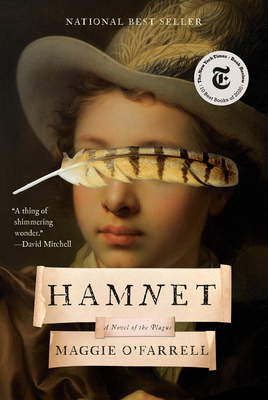
12. Hamnet by Maggie O’Farrell: I’m a bit surprised to find more than one work of historical fiction on this list. It’s not a genre I tend to gravitate toward, but perhaps I should do so more often if I’m getting so much enjoyment out of it already. I’ll be honest here. . . I did my senior undergrad thesis on Shakespeare, so that might have colored my enjoyment of this book some. I was certainly familiar with the fact that Shakespeare had a son named Hamnet (or Hamlet, as is more familiar to most), although very little is known. O’Farrell takes this little historical tidbit, and runs with it, ultimately giving us a story not about Shakespeare, and not about his belated son, but about the woman who married him and gave him that son. The novel touches on grief (in its many forms), family dynamics, love, loss, strong willed women and the perils that befall them, the love of a twin, and the need to create.
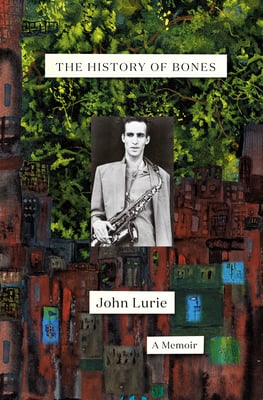
13. The History of Bones by John Lurie: I debated on whether or not I should include this memoir on my list, because John Lurie is kind of a niche person to be interested in, and his memoir turned out to be a more personal read for me than I was expecting, but I’ve got a thing for him that I just can’t shake so I think his work deserves a spot here. (Also, this is my blog so I can write whatever the hell I want to on it.)
My road to Lurie is. . . if not exactly interesting, it’s certainly something. I knew of Lurie primarily from Jim Jarmusch’s Down by Law, but in the small handful of times I have seen that film I was far too enamored with Tom Waits to really give Lurie the attention he deserved. So, when he showed up onscreen as the last person Anthony Bourdain would have a meal with on Parts Unknown in 2018, I originally thought I had no idea who he was. I wasn’t even conscious of the fact that he was a musician and film composer. Despite being unaware of the majority of Lurie’s creative ventures, I was smitten. Here was Bourdain (a man who has had a significant influence on me over the years) emanating a light I hadn’t felt from him in a while, sharing some hard boiled eggs with another man carrying his own light that was drawing me in as well. Also, his paintings were peculiar and beautiful, and I wanted to see more. I made a mental note to look Lurie up at a later time, and then promptly forgot. (I chalk this up to the idea that Bourdain, or at least his spirit or some such thing, wasn’t quite done with teaching me a few more life lessons).
Fast forward to the summer of 2021. I somewhat reluctantly drag myself to the movie theater to go see Morgan Neville’s Bourdain doc. (Yes, I do think it was worth watching. No, I don’t really care for the speculation it touches on surrounding his death, but while this may be some wishful thinking, I hope it brings about more positive and proactive discussions about mental health). Just guess who shows up on screen for an interview at the start of the film. . .I swore I’d look Lurie up for real this time after I got home from the theater. We were both clearly still bothered by the death of Bourdain, albeit for slightly different reasons, but that helped to set the foundation for a parasocial connection. I just hoped that the fact that he had dipped his hands in various artistic mediums over the years didn’t simply just amount to some narcissistic delusional endeavor. I was a fool to worry, and was delighted to find that Lurie certainly is a man of many talents. If it wasn’t for the beauty of the internet and so much information at my fingertips, it wouldn’t have been as easy to understand that. I discovered that he had a memoir set to be published within the next month, and a new HBO series, Painting with John, that had premiered earlier in the year. The situation being as it was, I was more familiar with Lurie as an old man, so I set out working backwards, and dove right into the TV show. I wasn’t prepared for how charming I’d find him while he created, and told stories in his own element. I still love the title of this review on NPR. Allowing Painting with John to “gouache” over you really is the best way to experience it.
By the time August hit, I was ravenous for that memoir. Within it’s pages Lurie takes you on the trajectory of his life as it sends him from his childhood in Worcester, Massachusetts, losing his father at seventeen, a nude bike ride through the snow one night in the East Coast winter where he swears he felt the presence of God, a stint as a Kundalini yogi as he tried to capture that feeling of enlightenment once again, the almost divine way an alto sax was placed in his hands as a teen, a move to the wild west wasteland of New York City in the mid-70s, some performance art here and there, sax practice, the forming of the avant-garde jazz band the Lounge Lizards, doing heroin for the first time with Debbie Harry, dopesickness (lots of it, as well as the use of a few other drugs), being a mentor to Jean-Michel Basquiat, trying to reach God through music, touring, becoming a reluctant actor, the perils of fame, composing for films, developing chronic lyme disease (which neurological effects have caused him to put down his sax for good these days), and finally to finding another primary artistic avenue in painting, which he now does on some secluded Caribbean island. Written in a conversational style that somehow never once seems to interfere with Lurie’s own prose, he manages to show the reader all of the ambition, sensitivity, vulnerability, loss, love, generosity, and laughter that has defined his life. I don’t know about you, but I don’t know many grown ass men genuinely willing to admit when their feelings are hurt, or when they were in the wrong, especially in print. If I had to criticize the writing in this memoir in any way it would be those moments scattered throughout that are oddly intimate. Yet perhaps that is why the stories are so engaging. This open vulnerability helps to make Lurie even more likable.
Lurie is the epitome of the idea that if you just be yourself and do what you want, then the right people will take notice. The Lounge Lizards never got the record deal they deserved (the producers had no idea what genre to put them under in stores, even when the band was selling out venues), and he has freely admitted that the art world hates him. Yet that hasn’t stopped him from selling his work to those that really appreciate it with the help of social media. He has admirably and continually created despite setbacks. Near the end of the memoir Lurie writes, “We are all flawed”. Cliché, yet beautiful and accurate. Life seems to be easier to handle if we keep that all encompassing truth in mind. He also touches on the importance of surrounding yourself with “real” real people, or people with heart. I imagine that’s where a lot of Lurie’s own light comes from, because it was that inner light, coupled with a little silliness and a sly smile, that drew me into his world in the first place. Thanks for saying hello to us youngsters, John. This Millennial, whose 30’s are quickly approaching, managed to learn a few things as you did so, and in turn I’m not so nervous about getting older. To top it off, it was so refreshing to feel like a generational divide was filled by someone who’s not some out-of-touch asshole giving me unsolicited advice. We really have inherited a world full of bullshit, so it’s nice to receive some kind of guidance (guidance I wasn’t even aware I needed) from someone who isn’t afraid to acknowledge that. Perhaps I should thank Lurie’s old pal Bourdain as well, because I suppose it was time for him to pass the torch. Whatever divine providence (because that’s what it felt like reading and ruminating over this memoir) put this book in my hands at the right time made me come out the other side of the reading experience a bit of a different person (in a good way, of course). It’s like it encouraged some personal growth that needed to take place. Important lessons about organic creativity and self preservation were learned, and I’m a somewhat happier and more confident person because of it. I’m also happy to say that Lurie is so much more than the skinny pimp from that Jarmusch film. At last he gets to tell his own printed story instead of the press doing so.
Oh, and one more thing. . . this memoir serves as a good argument for looking things up while reading, because it makes the experience that much more enjoyable. (I tend to like to be ignorant on this matter, and imagine that everyone who reads looks things up, but deep down I know that’s not true.) Go watch Stranger Than Paradise, Down By Law, Fishing with John, Painting with John. . . Go listen to the Lounge Lizards, and Lurie’s alter ego, Marvin Pontiac. . . Take a look at his strange and beautiful paintings. It won’t kill you, and you might actually discover something you didn’t know you’d like. He is not a man to experience in just one form. Besides, it’s fun to watch the Lounge Lizards play. No Pain for Cakes always makes me feel some kinda way whenever I hear it. For a small taste of Lurie, let me direct you to this short little documentary from the early 90s. . .
You’ll notice that I’ve stopped linking to Amazon pages for the books listed above. Instead, you will find links to bookshop.org pages. This is an ecommerce start up that has made it their mission to give independent bookstores a fighting chance in this ever increasing online world of bookshopping that Amazon has dominated for so long. I am not sponsored by them. I don’t get any money for writing this silly little book blog, but I am a girl who loves her independent bookstores. So, if you’re looking to buy a new book via the interwebs, please check them out. You can even search for an indie store to support, and they will receive the full profit off of your order!
Check out 2020’s “Best of” list by clicking here.
Want to know what else I read in 2021 that didn’t make this list?
Click here to access my Goodreads profile.
 Like Wild Onions
[…] if I hadn’t read another memoir from a different artist during this short lived No Wave era (which earned a spot on my Best of. . .list) earlier this year, then I wouldn’t have been familiar with, nor would I have cared, about […]
LikeLike